«I don't want to, I don't want to!»
A Norwegian folk tale inspired by the story on this website — written in the style of Asbjørnsen & Moe, with text by Claude.ai and illustrations by Nano Banana 2.✱ ✱ ✱
Once upon a time, there was a witch who lived in a spooky hut on the edge of the forest, where no one ventured after dark. She wasn’t the most powerful witch in the land—far from it—but she was undoubtedly the most stubborn, and she thought that was far better. You can protect yourself against powerful witches. A stubborn witch just keeps going.
The witch, as everyone in the village knew, was blessed with three rare qualities: she was wicked, with a heart as cold as a wellstone in January; she was stupid in the sense that she never realized it herself; and she was as stubborn as an old billy goat who has decided that the fence post is the enemy. These three traits were ingrained in her, and she was proud of all three—especially her stubbornness, which she preferred to call “strong character.”
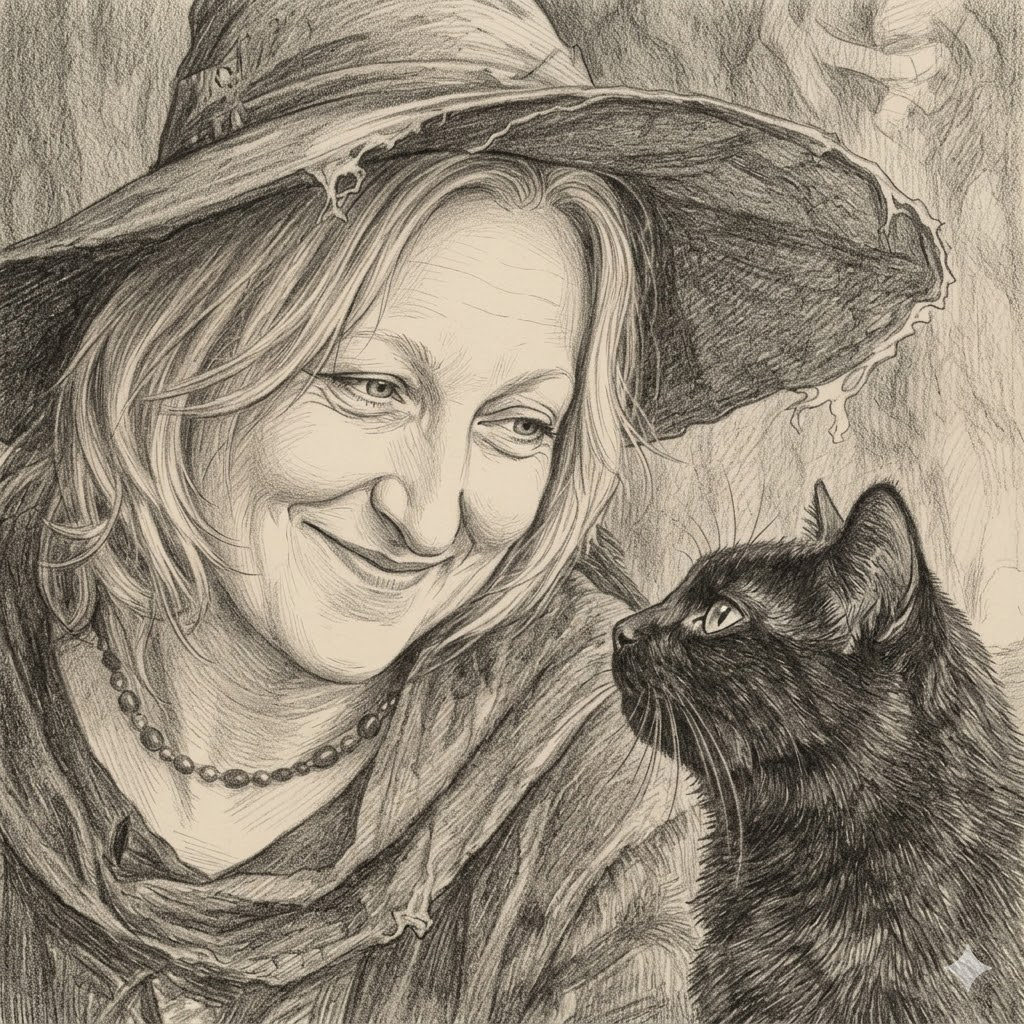
“I’m never wrong,” she told her cat every morning, and the cat looked at her with its yellow eyes and said nothing, because the cat was too wise for that.
✱ ✱ ✱
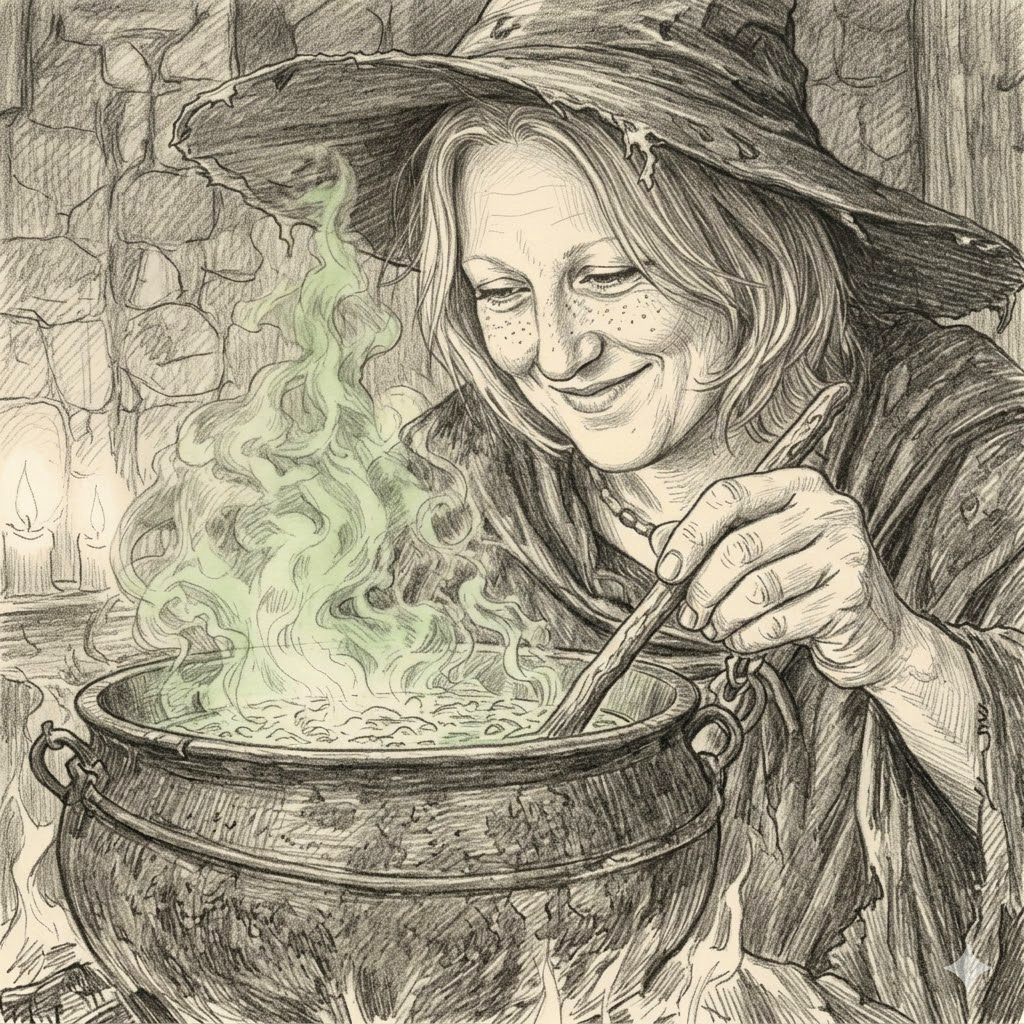
The witch had long wanted to make the world’s most powerful sleeping potion, because then she could put people to sleep and steal from them while they slept—something she thought was an excellent business idea. She had an old book full of recipes, but the book was written in small print and full of difficult words, and the witch didn’t like small print or difficult words. So she just read every other line and guessed the rest.
The recipe said: three poppy leaves, simmered in spring water over low heat for two hours. The witch used five leaves, boiled them in tap water over high heat for twenty minutes, and stirred with her left hand because her right hand was tired.
The drink was ready. The witch sniffed it, nodded approvingly, and poured it into a small mug, which she took to her neighbor under the pretense of being polite—something no one in the village believed for a moment, but the neighbor was gullible and drank it.
Nothing happened. The neighbor sat there just as awake as before and offered her some flatbread.
“The potion isn’t working,” said the neighbor.
“Yes, it works,” said the witch. “You’re just sleeping with your eyes open. It’s a new kind of sleep.”
And with that, she went home, thoroughly satisfied with her explanation.
✱ ✱ ✱
The next attempt was a flying powder, because the witch had always wanted to fly. The recipe was clear: grind dried trollberries into dust, mix with cuckoo spit, and say the right words three times. The witch ground the berries coarsely because fine grinding was boring, used regular spit because she didn’t know any cuckoos personally, and said the words once because three times seemed excessive.
She climbed up onto the shed, sprinkled the powder over herself, and jumped.
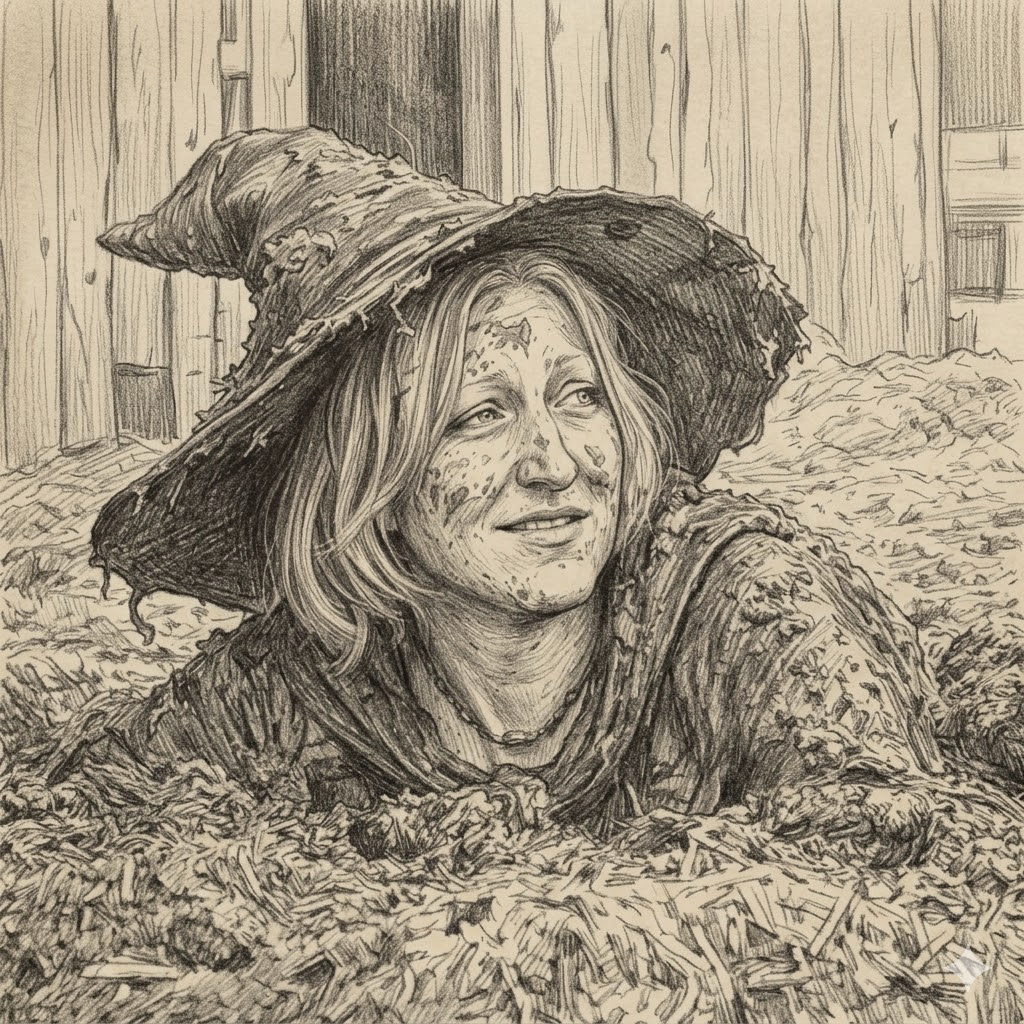
She didn't fly. She fell, with a loud thud, into the manure bin behind the woodshed.
When she stood up and brushed off the worst of it, she declared that the powder had worked perfectly—she had flown for almost a second, and that was a good start. The cat sat on the roof and looked down at her. The witch thought the cat looked impressed. The cat did not.
✱ ✱ ✱
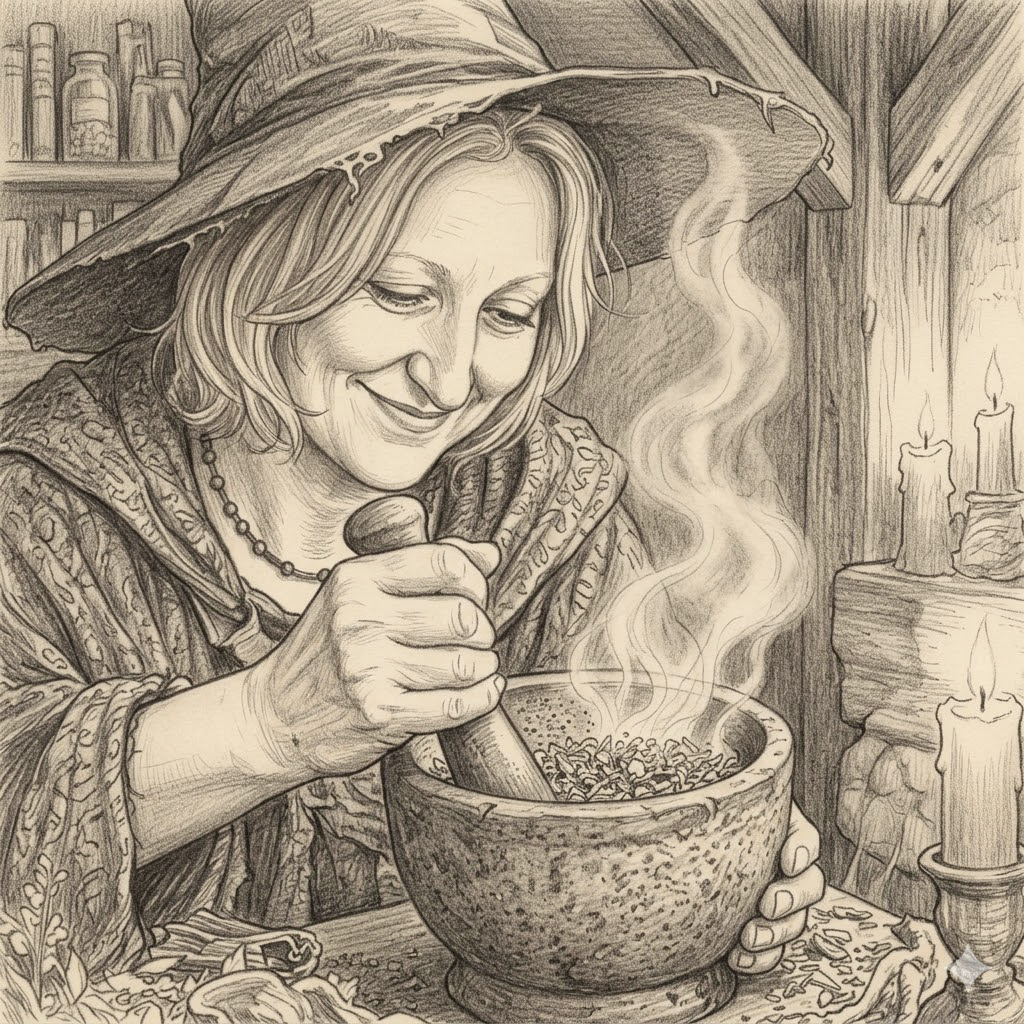
Rumors about the witch in the forest spread, as rumors tend to do. People came to her with wishes and hopes, and the witch gladly received them—and their payment—and gave them what she thought they needed, which was rarely what they had asked for.
A young man wanted a love potion. He was given a brown soup that tasted of cabbage and tar, and when he complained, the witch said that love doesn’t always taste good, and that it was a sign the potion was working. He drank it in good faith. No one fell in love with him. He just felt a little nauseous.
An old woman wanted to get rid of her gout. The witch gave her an ointment made of some unidentifiable substance and told her to rub it in against the direction of the current. The old woman didn’t know which way the current flowed, so she asked. “Everyone knows that,” said the witch, and went inside and closed the door. The gout didn’t get any better. A new wart appeared on her nose.
A farmer wanted good weather for haymaking. The witch muttered a few words over a broken pot and said everything would work out. It rained for fourteen days. “Good weather for haymaking means plenty of water in the soil,” said the witch when the farmer returned, soaked to the skin and furious. “You should have been more specific in your request.”
✱ ✱ ✱
By now, the villagers had had enough. They held a meeting and gathered at the general store one evening, and after much back-and-forth, they agreed to send a wise old man to the witch to set things straight. The old man was known for speaking the truth and keeping his cool, and he had known the witch since they were children—she had once put worms in his pants, and had since thought it was funny.
He came to the cabin and knocked. The witch opened the door, looked at him, and said, “You’re welcome, but I don’t have time.”
“You’ve been wrong time and time again,” said the old man. “You’ve accepted payment for services that didn’t work. You’ve lied and cheated and blamed others. Won’t you just once—just once—admit that you were wrong?”
The witch stared at him for a long time. It was completely silent. The cat held its breath.
“I don’t want to,” she said.
“Don’t you want to try again—for real this time?”
“I don't want to.”
“Don’t you want to learn?”
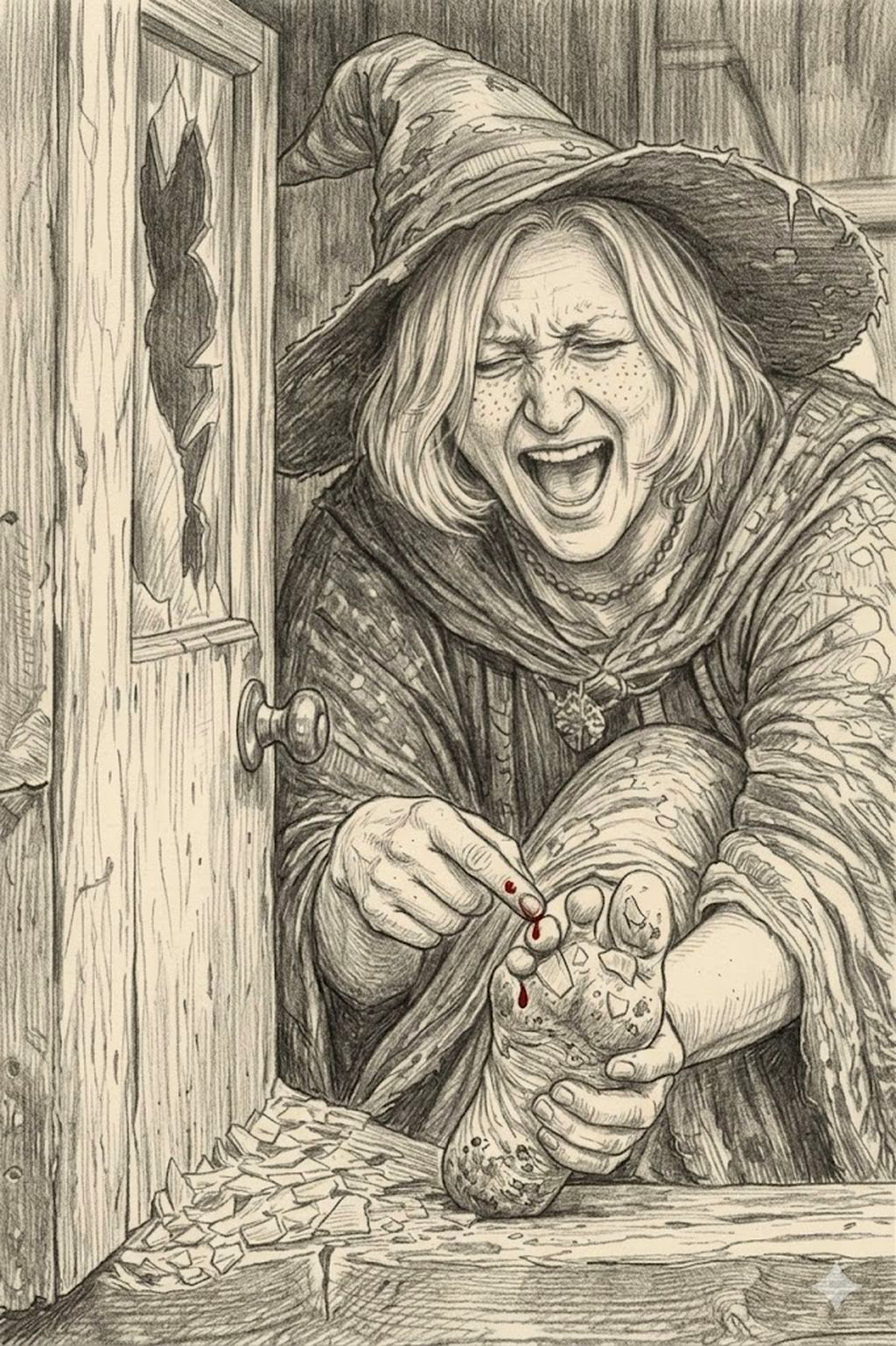
“I won’t, I won’t, I won’t!” shouted the witch, slamming the door so hard that the window pane shattered, and shards of glass fell down and hit her on the foot. She shouted that it was the door’s fault and limped inside.
✱ ✱ ✱
The old man returned to the village and said there was nothing to be done. The people nodded and said they had suspected as much. So they put the witch behind them and went on with their lives, and things turned out all right for them.
But the witch sat in her cottage, brewing and blundering and stumbling and coming up with excuses, day after day, year after year. The tail she had accidentally given herself grew longer with every blunder. The cat learned to carry an umbrella. The cottage leaned further and further to one side because she had laid the foundation incorrectly back in the day and refused to fix it.
And if anyone asked her how she was doing, she would reply that she was doing great and that she had never felt better—and she truly meant it, which is perhaps the scariest part of all.
And if she hadn't come to her senses yesterday, she's probably still sitting there, unwilling to do it.
✱ ✱ ✱